
PRESS RELEASE 2026-05-29
Downloadable press release (pdf).
Vadim Kessler, Professor of Inorganic Chemistry and Bionanotechnology at the Swedish University of Agricultural Sciences (SLU), is awarded with the Norblad-Ekstrand Medal 2025.
Vadim Kessler’s research focuses primarily on nanomaterials and nanoparticles, particularly in the fields of biomedicine and agriculture.
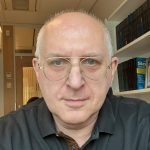
Foto: privat
Can you give a brief summary of your research?
– My research is devoted to bringing structural understanding at an atomic and molecular level of the phenomena on the surface of nanostructured materials. We are trying to build molecular models of interface structures and determine how they are constructed using single crystal X-ray crystallography and X-ray and NMR spectroscopy.
In the last decade, Vadim Kessler’s research group set their focus on using the smallest known oxide nanoparticles, polyoxometalate ions (POMs), as models of mineral particles in interaction with biomolecules such as phospholipids, proteins and nucleic acids.
– Using the obtained mechanistic knowledge, we are developing, in collaboration with colleagues from the biomedicine and agriculture domains, new solutions for such exciting challenges as regulating immune reactions in blood, creating antiviral surfaces and boosting plant stress resistance.
How did you become interested in inorganic chemistry?
– I have always been keen to learn how things are constructed, as a child disassembling mechanic alarm clocks and once even unwrapping a present in the hands of a Santa Claus figure under the Christmas Tree. Inorganic Chemistry taught at the first year of my university studies totally impressed me by giving insight into how the world is constructed, how the atoms are sitting together, giving rise to reactivity, transformations, function of enormous multitude of compounds of different chemical elements. To learn more myself, I needed to master inorganic synthesis, crystallization techniques and X-ray single crystal structure determination.
Is there anything from your research that you are particularly proud of?
– I am very proud that we were able to bring forward understanding of how metal oxide nanoparticles (nano sized sand grains) are formed in the so-called sol-gel synthesis and could produce them in large quantities to convert them into a useful tool in agricultural and potentially biomedical applications. More recently, with the POM model studies, we were able to advance in understanding how sand nanoparticles can gain advanced antiviral activity, revealing how they form complexes with viral proteins, oxidize key amino acids and potentially deactivate viral RNA.
I have always been keen to learn how things are constructed, as a child disassembling mechanic alarm clocks and once even unwrapping a present in the hands of a Santa Claus figure under the Christmas Tree.
What is the next step in your research?
– In recent years, we have been developing principally new approaches to visualizing the interactions at the interface between the proteins responsible for immune reactions in blood with metal oxide nanoparticles. Our main tool has been cryo-electron microscopy. The challenge in these studies is that these proteins are flexible and have low electron density in their active fragments, while nanoparticles are in comparison rather dense, which leaves the actual active interaction interface poorly resolved. Our goal now is to apply the library of POM structures we accumulated to build up an AI predictive tool for revealing the structure of these poorly defined interfaces at an atomic level.
Do you have a favorite historical chemist?
– My favorite chemists are brilliant inorganic crystallographers Arne Magneli and Ingvar Lindquist who once got the Norblad-Ekstrand medal the same year. Ingvar Lindqvist determined the structure of one of the most important POMs, the Lindquist ion, while Arne Magneli pioneered structural studies of oxide materials built of nanosize blocks, so-called Magneli phases. To stand on the same podium as these giants is a fantastic reward.
How does it feel to be awarded the Norblad-Ekstrand medal?
– I am greatly and deeply honored. It feels truly fantastic. A very inspiring recognition of my and my groups efforts in bringing insights into molecular mechanisms in formation and reactivity of inorganic nanoparticles.
Vadim Kessler graduated from Moscow State University (MSU) in 1987. That’s also where he earned his PhD in inorganic chemistry in 1990, with his dissertation “Synthesis and Physical Chemical Properties of Molybdenum(VI) Alkoxides.” After completing his doctorate, he obtained a position as a research assistant at the same university, while also working part-time as a postdoctoral researcher at the X-ray Crystallography Center of the Russian Academy of Sciences between 1990 and 1991.
With a broad and significant publication record in inorganic chemistry, particularly in solution chemistry, Vadim Kessler has made major contributions to the field.
He has also been greatly involved in the development of precursor materials for the synthesis of nanomaterials, in molecular structure determination using X-ray techniques, and in the development of nanomaterials for biomedical and agricultural applications.
His contributions to the Swedish Chemical Society (Svenska Kemisamfundet) have also been substantial. Among other things, he organized the first inorganic chemistry conference Oorgandagarna together with Professor Ingmar Persson.
The Norblad-Ekstrand Medal is awarded to individuals who have distinguished themselves through outstanding scientific research in the field of chemistry and its interdisciplinary sciences, or who have carried out valuable work for the benefit of the Swedish Chemical Society.