
Nobelpriset i kemi 2026 går till Henri Kagan från Université Paris-Sud, Frankrike, och Kenso Soai från Tokyo University of Science i Japan ”för upptäckt av icke-linjära effekter och autokatalys i asymmetrisk organisk syntes”.
Varje år när Nobelpriset i kemi har förkunnats publicerar Kemisamfundet kommentarer från forskare inom det aktuella forskningsfältet. Nedan kan du ta del av kommentarer från Helena Grennberg, professor i organisk kemi vid Uppsala universitet samt ordförande för Kemisamfundet, Per-Ola Norrby, Senior Principal Scientist på AstraZeneca, Kenneth Wärnmark, professor vid Centrum för analys och syntes vid Lunds universitet, Fredrik Schaufelberger från University of Warwick och Belén Martín-Matute, professor i organisk och organometallisk kemi på Stockholms universitet samt ledamot i kemiklassen på KVA.
Kemister kommenterar Nobelpriset:

Kemisamfundet.
Foto: Lise-Lotte Sjöberg
Helena Grennberg, professor i organisk kemi vid Uppsala universitet samt ordförande i Svenska Kemisamfundet:
─ Det här blev jag glad över! Viktiga grundvetenskapliga observationer och förklaringar som ökat vår förståelse för hur kemiska reaktioner kan vara inte bara selektiva utan mer (eller mindre) selektiva än det som förväntats. Samt tillämpbart vid förbättring av processer och utveckling av nya reaktioner!
─ När jag var student gav Henri Kagan en gästföreläsning. Det bör ha varit omkring 1986 och det handlade om ickelinjära effekter. Jag förstod inte så mycket då, men har lärt mig. Idag är effekterna och vad det innebär del av den gemensamma kunskapsbasen, och viktigt för all syntetisk organisk kemi.
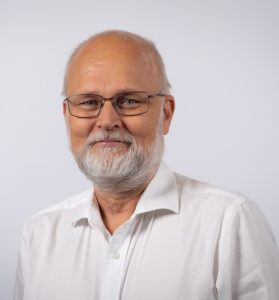
Per-Ola Norrby, Senior Principal Scientist AstraZeneca
The implications of these studies are not limited to ”just” improving organic synthesis, but also, for example, understanding the origin of life.
─ This years’ Nobel Prize was interesting on a very fundamental level, focusing on deep understanding. Several previous prizes have been awarded for success in asymmetric synthesis, and understanding how one molecule can influence another to induce chirality. At a very basic level, this years’ prize goes beyond that, and looks at when the presence of multiple copies of the same chiral molecule can act synergistically. The chiral inducers, which come in R or S form, can sometimes interact with each other. If the R-R combination gives a more active inducer, and the R-S combination is less active, you get non-linear effects that can greatly enhance the asymmetric induction. Kagan laid the ground work, exploring many such non-linear effects, where 1+1 can be very different from 2. Soai developed a system that takes this to the extreme, and allows a very tiny excess of one isomer to be enhanced to become virtually pure product of one isomer only.
─ The implications of these studies are not limited to ”just” improving organic synthesis, but also, for example, understanding the origin of life and the original symmetry breaking that allowed our ancestors to focus on one mirror image only, to become homochiral. This forms a fundament of all biology as we know it today.
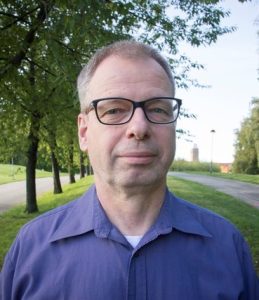 Kenneth Wärnmark, professor vid Centrum för analys och syntes, Lunds universitet
Nobelpristagarna har för första gången sedan för 3,8 miljarder år sedan upprepat vad som gjordes då ─ nu i en rundkolv på labbet.
Jag tycker årets nobelpris är viktigt för att:
1) Det behandlar kiralitet och principiellt om hur överskottet av av höger- eller vänsterhänta molekyler har uppkommit i Naturen. Till exempel är i princip alla aminosyror “vänsterhänta” medan alla sockermolekyler är “högerhänta” i naturen.
2) Nobelpristagarna har för första gången sedan för 3,8 miljarder år sedan upprepat vad som gjordes då ─ nu i en rundkolv på labbet. Det vill säga att de har listat ut hur man från en infinitesimalt liten mängd av ett ämne som fungerar som katalysator, kan få fram en produkt som är 100% av den ena formen dvs 100% höger- eller 100% vänsterhänt. Naturligtvis var “urreaktionen” för 4 miljarder år sedan en helt annan än den som de gjorde i laboratoriet, men i stora drag kan principerna nu och då vara desamma.
3) Receptorerna i våra kroppar är kirala. Eftersom de ofta är proteiner, och därmed vänsterhänta, innebär det att när en molekyl träffar en receptor så ger det olika effekter hos receptorn. Ett exempel är i vår näsa. När högerformen av en doftmolekyl, till exempel limonen som finns i citrusfrukter, träffar receptorn i näsan så känner vi citrusdoft medan vänsterformen ger lukt av barrskog.
4) Upptäckten har betydelse för läkemedelsindustrin där man arbetar mycket med att få fram endera 100% av högerhänt läkemedel eller 100% av vänsterhänt läkemedel. Detta gör man effektivast genom så kallad asymmetrisk syntes (ett område som fick nobelpris senast 2021). Att framställa läkemedel i höger- eller vänsterformen har betydelse som man först bevittnade under den så kallade neurosedynkastrofen i början av 60-talet då ett läkemedel såldes som innehöll en blandning av högerhandsformen och vänsterhandsformen. Den ena formen ledde till att vissa gravida kvinnor blev av med morgonsjuka (önskad effekt) och den andra till att barn föddes med missbildningar, som inga armar eller ben. Sålunda, vet man nu inom läkemedelsindustrin att det är viktigt att framställa både höger och vänsterformen av ett kiralt läkemedel och att testa båda så att den formen man sedan säljer ger den önskade effekten och inte en bieffekt. Upptäckten som årets nobelpris visar på är hur man kan framställa den önskade former 100% rent effektivt. Att framställa bara den aktiva formen av ett läkemedel men inte den andra har ju också miljömässiga fördelar. Du slipper slösa resurser på att framställa en form som i bästa fall bara är inaktivt men i värsta form är direkt farlig.
5) De två pristagarna är lika värdiga nobelpriset ty de har med två helt olika reaktioner visat hur överskott av höger- och vänsterhänta molekyler uppkommer med två olika principer.
 Fredrik Schaufelberger, Assistant Professor of Synthetic Chemistry, University of Warwick
Do you think this research was worthy of the Nobel Prize in Chemistry, and if so, why?
It is an extremely deserving prize. I don’t think it was a prize many had predicted and I certainly didn’t see it on the betting lists, but it is one of these prizes that when it was announced, everyone around was just nodding and agreeing and feeling that this was a superb choice. It is a highly fundamental prize about counterintuitive observations that changed the way we think about both highly practical areas (asymmetric synthesis of new functional molecules like pharmaceuticals) and also truly blue-skies areas such as the origin of life (“why is life homochiral?”). Unlike some recent awards which were quite “development-driven” with the development of new reactions or tools of broad usage in chemistry, this is a “classic” science prize about some very fundamental aspects of life and nature. A great choice!
Combined, what these two winners have showed is a very feasible model for how life on Earth has “chosen its handedness.”
What have these researchers’ discoveries meant to you and your own research, and to research in general?
Autocatalysis is a core feature of all models on how life arose on earth, and what this year’s laureates showed was that autocatalysis can also be asymmetric and used to amplify “handedness” or “mirror images” in nature so that an initial very small excess of one mirror image can be translated into a large one.
The Soai reaction is one of the world’s most famous chemical experiments and I have thought about it in my undergraduate course on Chemical catalysis ever since I started it. Kagan’s fundamental work on asymmetric synthesis – both concepts and practice – almost led him to share the prize given to that field in 2001, so it is great to see him awarded for his outstanding work now in 2026. Combined, what these two winners have showed is a very feasible model for how life on Earth has “chosen its handedness” – an extremely complex and intriguing problem of great value. There are also quite a few practical implications, as asymmetric autocatalysis has been tested for more efficient production of fine chemicals and similar.
For my own research, I spent a large part of my PhD work at KTH on autocatalysis and chemical networks, and the Soai reaction was always the key precedent underlying all our observations and hypotheses. Additionally, one of my favorite papers of all time is Soai’s discovery that a single neutron (substitution of 12C to 13C in a single atom in a large molecule) in a racemate is enough to set off the asymmetric autocatalysis cascade and induce homochirality into the mixture – a truly spectacular discovery!
Do you have any comments about the people who received the prize?
Thoroughly well deserved and the correct choice. Perhaps the prize could also have been given to Donna Blackmond at the Scripps institute who was the one who figured out some of the more complex details of Soai’s reaction, but fundamentally Soai and Kagan are the discoverers behind this and worthy laureates.
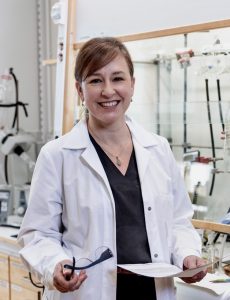
Photo: Gonzalo Irigoyen
Belén Martín-Matute, Professor in Organic and Organometallic Chemistry at the Chemistry Department at Stockholm University and Member of the Royal Swedish Academy of Sciences, Class for Chemistry.
Do you think this research was worthy of the Nobel Prize in Chemistry, and if so, why?
─ Yes! The Nobel Laureates in Chemistry 2026, Henri Kagan and Kenso Soai, demonstrated in the laboratory how homochiral organic molecules can be obtained in a reaction, starting essentially from a non-chiral environment, in other words from a catalyst that is nearly racemic or only slightly enriched in one mirror-image form. They showed, via two distinct approaches, how homochirality can be created in the laboratory; Kagan through non-linear effects, where a catalyst of low enantiomeric purity gives a product of much higher enantiomeric purity, and Soai through asymmetric autocatalysis, where the product catalyzes its own formation and amplifies a tiny initial imbalance.
What have these researchers’ discoveries meant to you and your own research, and to research in general?
─ We develop methods to build functionalized organic molecules, both single-handed (homochiral) and non-chiral, by forming specific carbon-carbon or carbon-heteroatom bonds. To achieve this, we use designed catalysts that enable chemical reactions with very high efficiency and selectivity. When a catalyst is itself ”handed” (chiral), it can steer a reaction to make mostly one mirror image of the organic molecule and not the other. This preference is called enantioselectivity, and it is how we obtain homochiral molecules. Such reactions may behave as Kagan or Soai systems: a catalyst that is only partly single-handed can still give an almost purely single-handed product (Kagan), or the product itself can act as the catalyst and amplify a tiny initial imbalance until one mirror image dominates (Soai). Thanks to the careful observations of these Nobel laureates, we can explain the outcomes of the reactions we investigate in the laboratory.
Do you have any comments about the people who received the prize?
─ I am very excited about this prize. I studied Kagan’s and Soai’s discoveries when I was undergraduate and PhD student, so seeing them recognized with the Nobel Prize is truly wonderful. My warmest congratulations to both laureates!
Watch Belén in the piece about the Nobel Prize in Rapport from October 7 (15:45 minutes in) here: Rapport – Ons 7 okt 19:30 | SVT Play
Mer om Nobelpriset i kemi 2026:
Se ett inslag på SVT Play, där Henrik Pedersen, professor i oorganisk kemi, Emma Sparr, professor i fysikalisk kemi vid Lunds universitet samt ledamot i Nobelkommittén för kemi och Johan Åqvist, professor i teoretisk kemi vid Uppsala universitet samt ledamot i Nobelkommittén för kemi förklarar priset: Nobel: Tillkännagivanden – Kemi | SVT Play
Invitation to comment on the Nobel Prize in Chemistry / Inbjudan till att kommentera Nobelpriset i kemi
Varje år publicerar Kemisamfundet kommentarer från forskare inom vinnarnas forskningsfält.
Kan du ge en kommentar?
- Tycker du att detta var värt Nobelpriset i kemi och i så fall varför?
- Vad har dessa personers upptäckter betytt för dig och din forskning och för forskningen i stort?
- Har du någon kommentar om de personer som fick priset?
Om du skulle vilja ge en kommentar, mejla erika.lindbom@kemisamfundet.se. Namnge mejlet ”Nobelpriset”, skriv dina svar och ange gärna var du arbetar eller studerar. Återkom gärna så fort som möjligt. Kommentarer kommer att uppdateras hela veckan.
English:
Each year, the Swedish Chemical Society publishes an article with comments from researchers in the prizewinners’ field of research.
Could you give a comment on this years’ award?
- Do you think this research was worthy of the Nobel Prize in Chemistry, and if so, why?
- What have these researchers’ discoveries meant to you and your own research, and to research in general?
- Do you have any comments about the people who received the prize?
If you would like to give a comment, please email erika.lindbom@kemisamfundet.se. Please use the title “Nobelpriset” for your email, write your answers, and include where you work or study. Please get back to us as soon as possible.